Online Math Games vs. Worksheets: Which Actually Works?
The goal is for kids to actually do the math and learn from their mistakes. A worksheet that never gets finished, or a game where kids click through without thinking, both miss that goal. Picking the right tool for the job saves time and frustration.
This isn't really a contest. Worksheets and games are good at different things, and the trick is knowing which one fits the moment.
What worksheets do well
- Quiet, independent practice. Every student works their own problems at their own pace.
- Showing work on paper. You can see exactly where a student's thinking went wrong.
- No tech needed. They work during a power outage, on a bus, or anywhere.
Where they fall short: feedback is slow. A student can do 20 problems the wrong way before anyone notices, and the kids who are already discouraged often don't start at all.
What math games do well
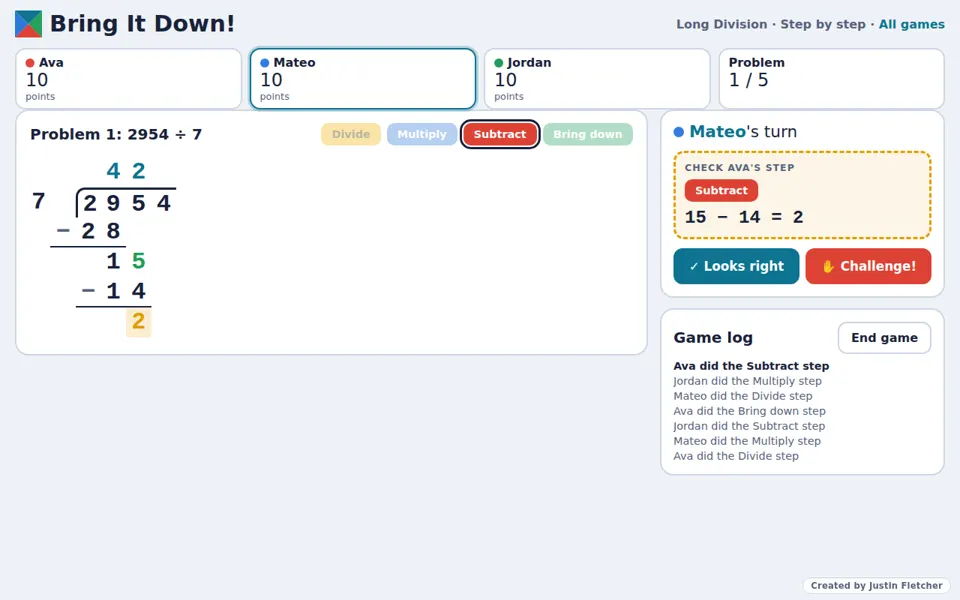
- Instant feedback. Students know right away whether they got it. In Fletcher Math games, a miss shows the worked steps so students see how to fix it.
- Motivation. Kids who would stare at a worksheet will often do problem after problem to beat the other team.
- Talking about math. In team games, students explain and argue about answers, which helps everyone.
- Fresh problems. Fletcher Math math games generate new problems every game, so students can't just memorize answers.
Where they fall short: in a team game, not every student solves every problem, and a bad game can be all flash with very little math.
How to get the best of both
- Use games to practice and review, worksheets to check. A game on Thursday, a short independent check on Friday.
- Make the game a worksheet. Have every student solve each game problem on paper before the team answers. You get the motivation of the game and the written work of a worksheet.
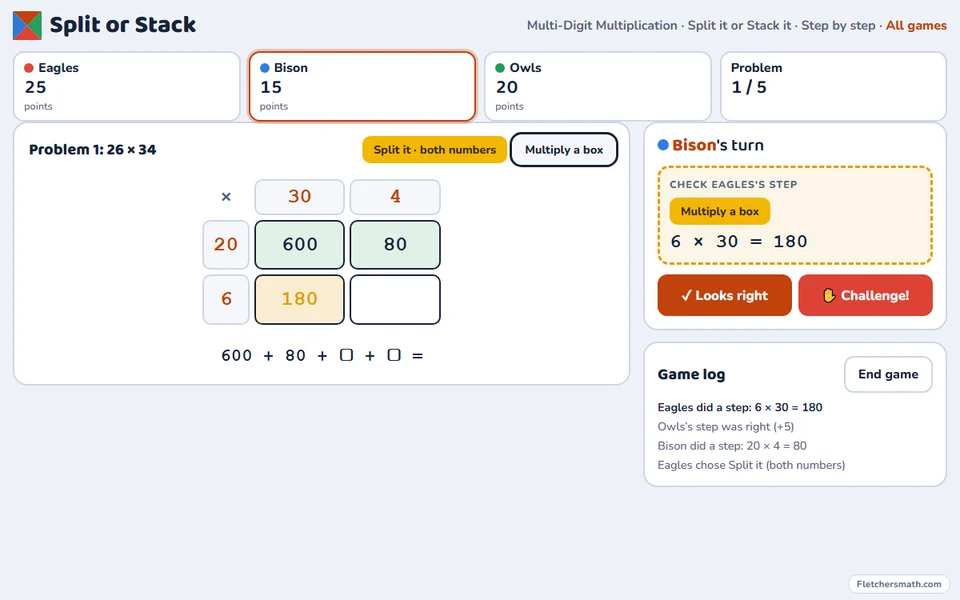
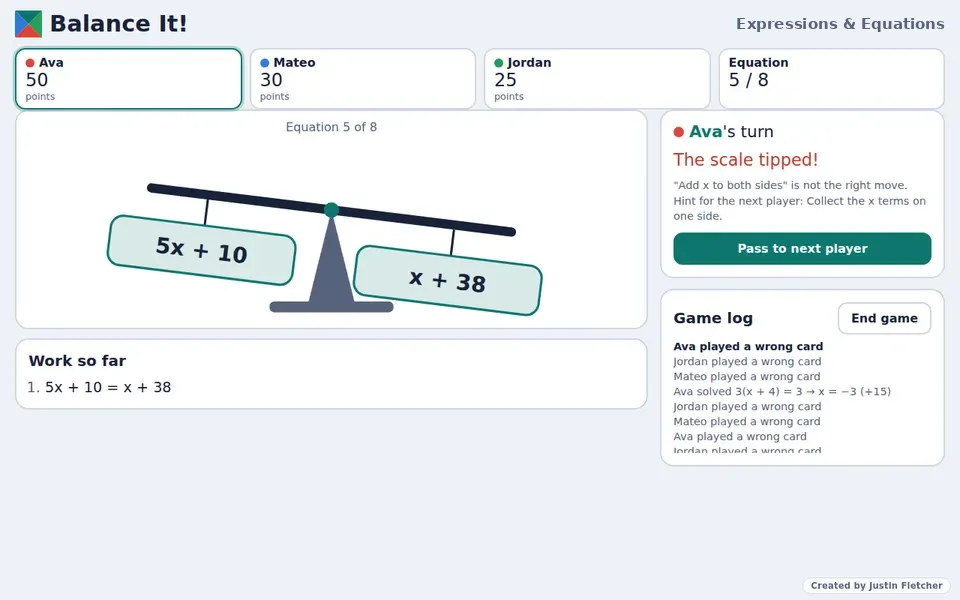
- Choose games that show steps. Games like Bring It Down!, Split or Stack and Balance It! make students work one step at a time, just like on paper.
For parents at home
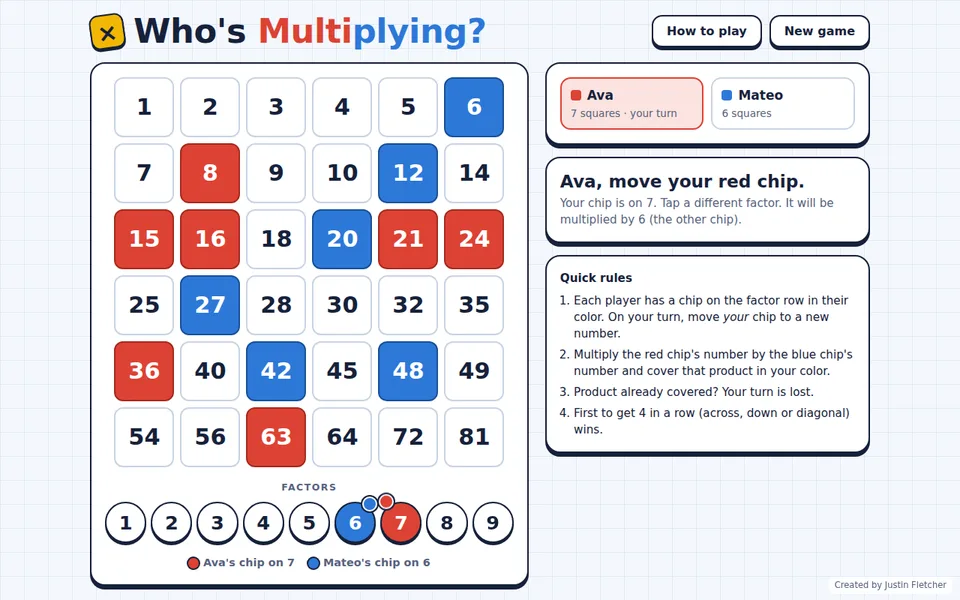
If homework turns into a fight, try playing a game on the same skill first, then doing the worksheet. A few rounds of Who's Multiplying? before a page of multiplication facts can change the mood completely. For a younger child, Counting Critters or Fact Fiesta work the same way.
Find a game for the skill you're working on: browse by grade, topic or standard.
Common questions
Are math games better than worksheets?
Neither is better at everything. Games are better for motivation, quick feedback and review. Worksheets are better for showing independent written work. Most classes benefit from both.
Can my child use a game instead of homework?
That's up to your child's teacher, but a game is a great warm-up before homework on the same skill.