Best Online Math Games That Actually Keep Kids Engaged
Kids can tell in about a minute whether a game is a game or a worksheet wearing a costume. If they check out, they stop doing math. The games worth your time are the ones where the math is the game, so every answer moves something that matters to them.
Most "educational" games lose kids fast. The math is a quiz that pops up between the fun parts, so students learn to click through it to get back to the game. A game that keeps kids engaged works the other way around: the math is how you win.
What engagement actually looks like
Here's what to look for before you give a math game your child's or your class's time:
- Every answer changes the game. A right answer moves your piece, buys a property or blocks a rival. If the answers don't matter, kids stop caring about them.
- Players make choices. Picking an Easy, Medium or Hard problem, deciding where to place a tile or when to bet points gives kids a reason to think instead of just tapping.
- Other people are watching. Playing against classmates or a sibling on one screen is far more motivating than playing alone against a timer.
- Mistakes are fast and fixable. Kids should find out right away if they missed, and see how to do it right, without being stuck.
- It's new every time. If the problems repeat, kids memorize answers instead of doing math.
Games that hold attention
These are the Fletcher Math games to start with if the goal is "keep them playing." Each one is a multiplayer game for 1 to 6 players or teams on one screen, and you choose the grade on the start screen so the problems match.
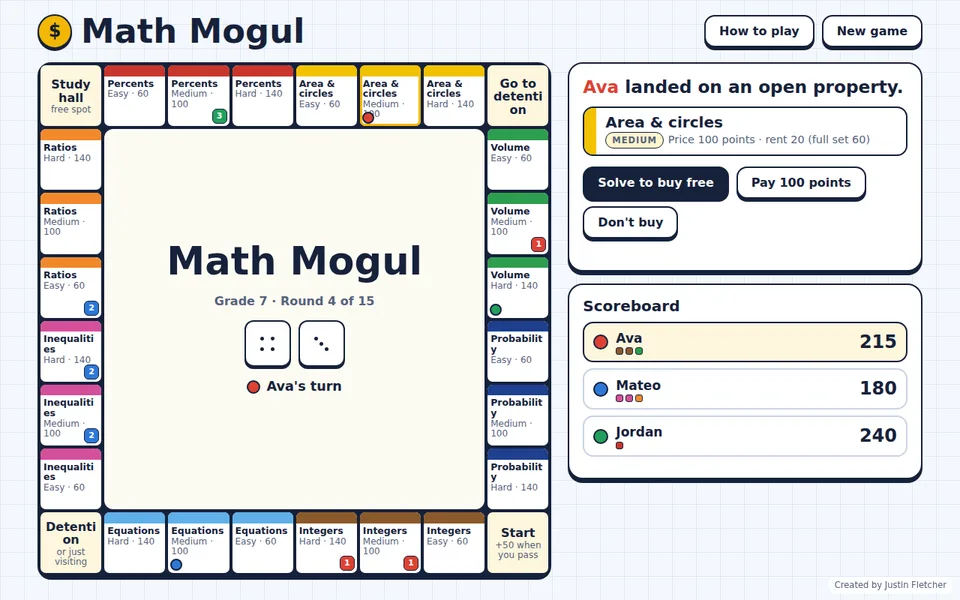
- Math Mogul (grades 3–8): A property-trading board game. Land on a property and solve its Easy, Medium or Hard problem to buy it. Trades, Chance cards and color sets keep every turn interesting.
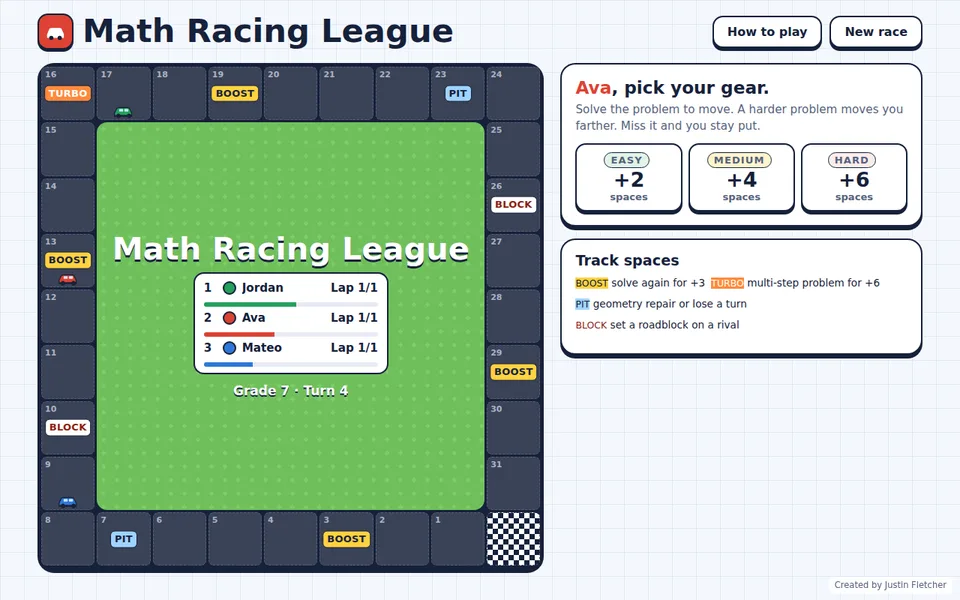
- Math Racing League (grades 3–8): Choose your gear. Easy moves 2 spaces, Medium 4 and Hard 6, so students are always deciding how much of a challenge to take on.
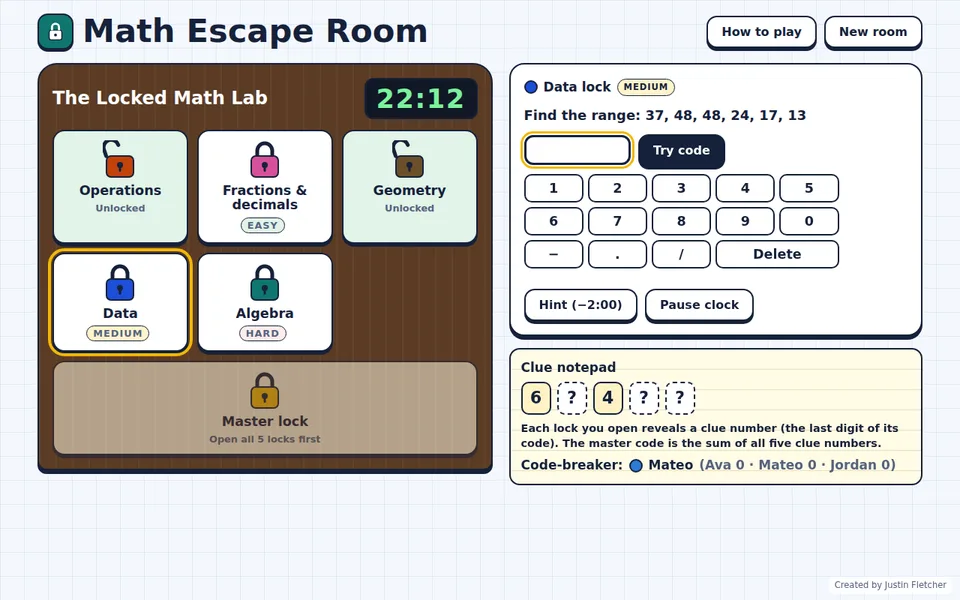
- Math Escape Room (grades 3–8): Crack five topic locks before time runs out, then use the clue numbers to open the master lock. It's a new room every game.
- Who's Multiplying? (grades 3–5): Move your chip, multiply, and claim the product. It plays like a strategy game, so kids practice facts without noticing how many they've done.
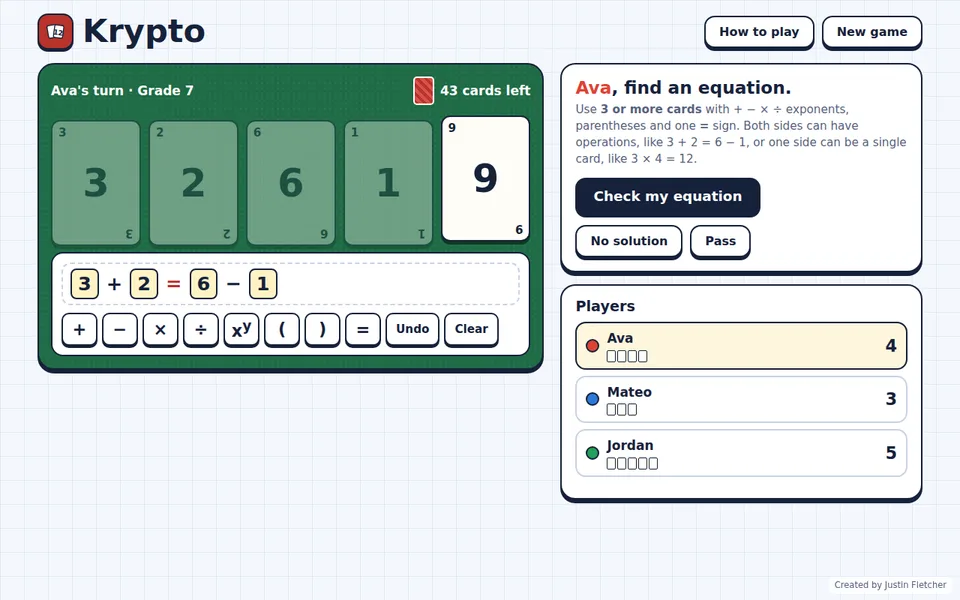
- Krypto (grades 3–8): Make a true equation from five number cards. There's no single right answer, which makes it great for kids who like puzzles.
- Algebra Wizards (grades 6–8): Simplify expressions and solve equations to cast spells, duel other wizards or team up against the Algebra Dragon.
Why playing together matters
A lot of math apps are built for one child and one screen. That's fine for practice, but it's the social part that keeps kids engaged. When teams take turns on a smartboard, the kids who aren't answering are still checking the answer, cheering, and arguing about strategy. That talk is math too.
How to tell if a game is working
You don't need a dashboard to see engagement. Watch for kids asking for "one more round," checking each other's work, and choosing harder problems on their own. If they're racing to finish so they can do something else, the game isn't doing its job.
Every Fletcher Math game has a free demo on its page, so you can see if it clicks with your kids before you spend anything. Browse all the games by grade or topic.
Common questions
Do these games need internet?
No. Once you download a game it runs in any web browser with no internet connection. The free demos on the website do need internet.
Do kids need accounts?
No. There are no logins or student accounts. You open the game, choose players and a grade, and press Start.
How long is the free demo?
Each demo gives you 5 questions or 5 minutes, whichever comes first, so you can see how the game plays.