Best Math Games for Struggling Learners (K–12)
Struggling learners often get the least practice, because practice feels like failing over and over. The right game flips that. It gives them small wins, shows them how to fix mistakes, and lets them practice without everyone watching them get it wrong.
A student who's behind in math usually knows it. Every worksheet is a reminder. A good game for a struggling learner has to do two things at once: meet them where they are, and make trying again feel safe.
What helps struggling learners
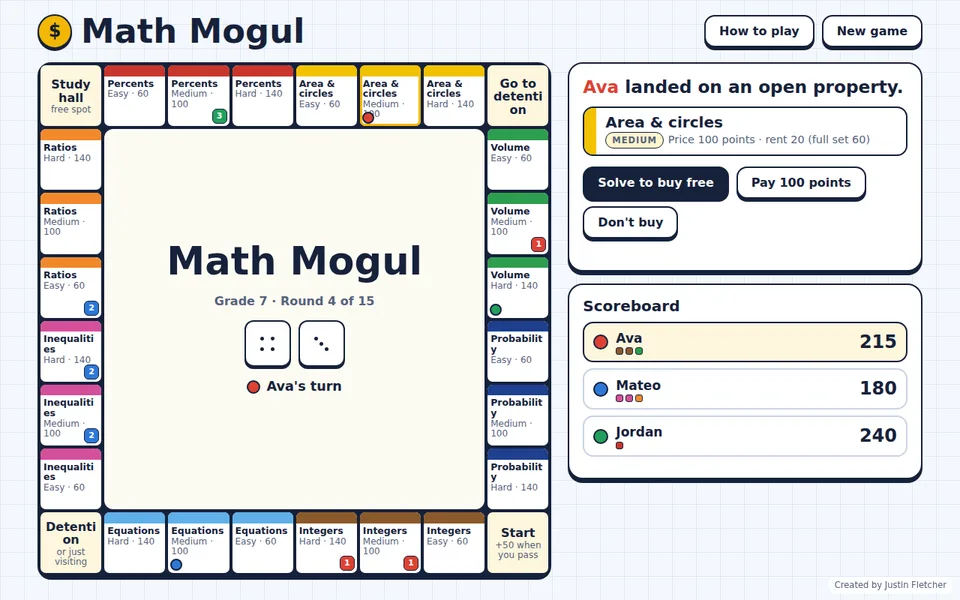
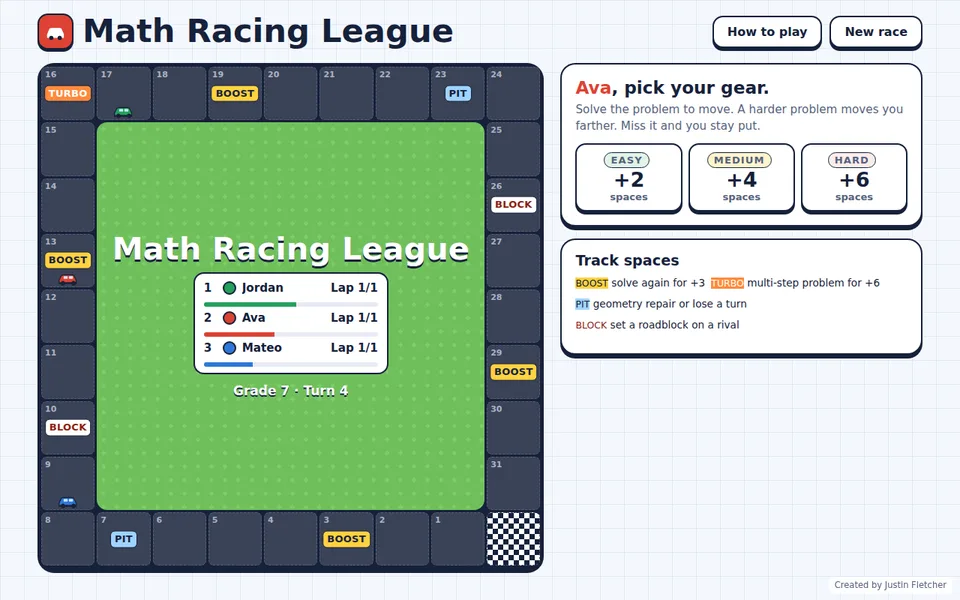
- Choosing the difficulty. When a student can pick an Easy problem and still help their team, they get to contribute instead of sitting out.
- Seeing how to fix a mistake. A wrong answer should come with the worked steps, not just a red X.
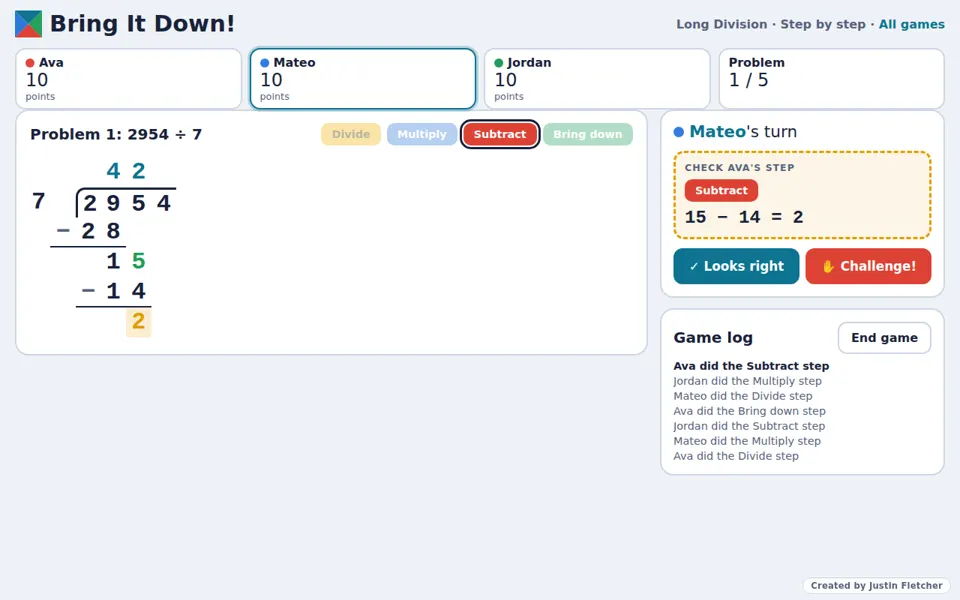
- One step at a time. Breaking a long problem into steps keeps it from feeling overwhelming.
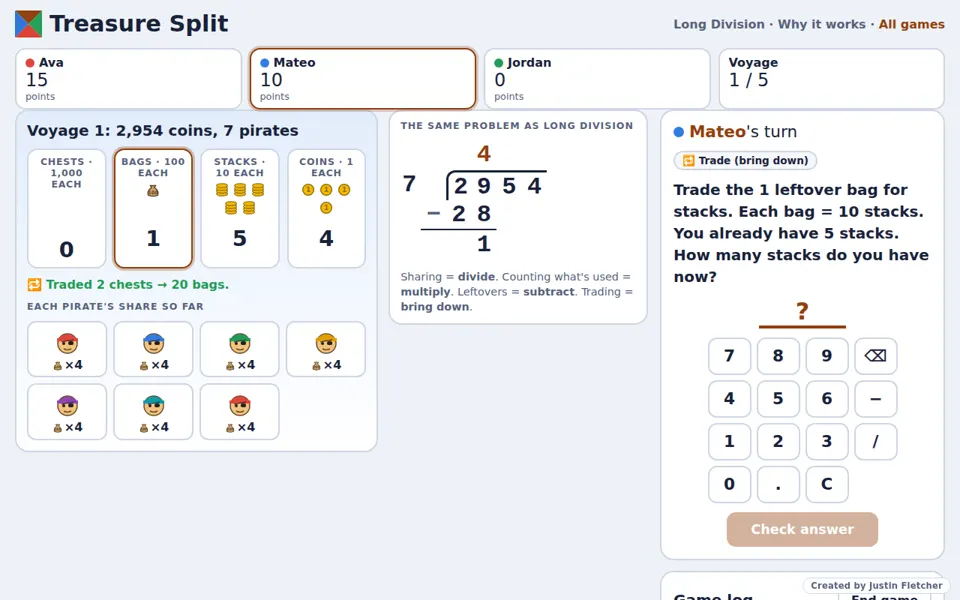
- Pictures and models. Seeing the math, like fractions on a number line or long division with coins, builds understanding that memorized steps don't.
- A team. Teammates explain, encourage, and share the weight of a wrong answer.
Games that fit
- Math Mogul and Math Racing League (grades 3–8): Students choose Easy, Medium or Hard on every turn, so every student can earn points for the team.
- Treasure Split (grades 4–7): Pirate crews split chests and coins evenly. It's long division you can see, with the written problem building right beside it.
- Bring It Down! and Split or Stack: Long division and multi-digit multiplication done one step at a time, with teammates checking each step.
- Fraction Line Leap (grades 3–4): Fractions on a number line, which helps students who are lost with fraction rules.
- Double Trouble and Fact Fiesta (grades 1–4): Fact strategies like doubles and making 10, for students still building fluency.
Use the grade setting
Many Fletcher Math games let you choose the grade on the start screen. For a student who's behind, you can quietly set a game a grade lower for review, then move it up as they gain confidence. No one else needs to know.
Tips for parents
- Play with your child instead of watching. Take turns, and let them see you get one wrong and fix it.
- Celebrate the strategy, not just the right answer: "How did you figure that out?"
- Keep it short. Ten good minutes beats forty frustrated ones.
If your child may have a learning disability in math, talk with their teacher or school about an evaluation. Games are a great support, but they don't replace the right services.
Common questions
Can I set the games to an easier level?
Many games let you choose the grade on the start screen, and several, like Math Mogul and Math Racing League, let students choose Easy, Medium or Hard problems on each turn.
What happens when a student gets an answer wrong?
The game shows the worked steps so the student can see how to solve it, and play moves on.