Math Games That Cover Multiple Grade Levels (For Siblings)
Families with kids in different grades often end up buying separate apps and managing separate screens. A game that works across grades lets siblings play together, which is easier on you and more fun for them.
Getting a 3rd grader and a 7th grader to play the same math game sounds impossible. It isn't, if the game lets each player work at their own level.
Games that span grades
Many Fletcher Math games cover grades 3–8. You choose the grade on the start screen, and the problems match it. Several also let each player choose Easy, Medium or Hard on every turn, which is what makes sibling play work: the younger child takes Easy problems, the older one takes Hard ones, and both can win.
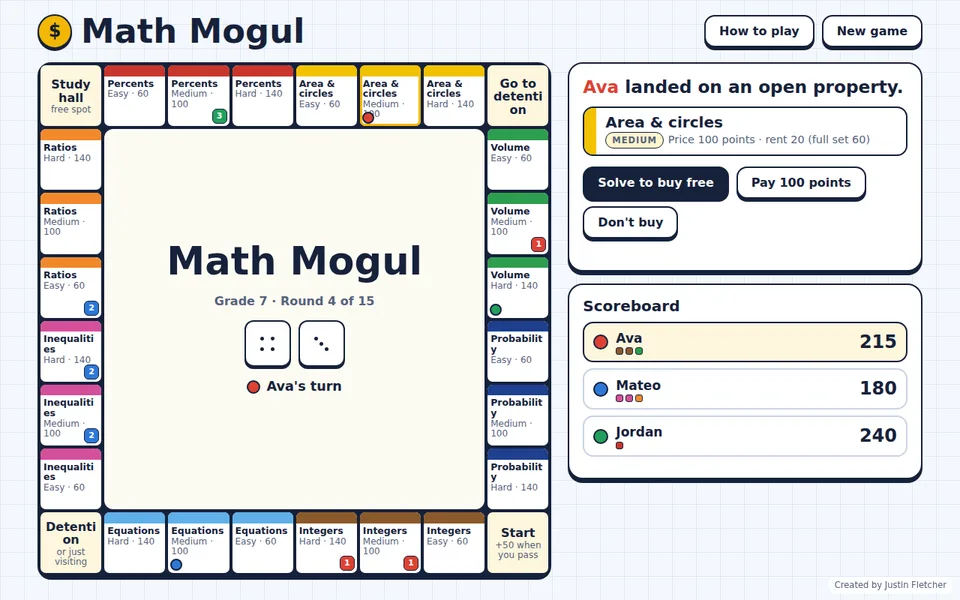
- Math Mogul: A property-trading board game with Easy, Medium and Hard problems.
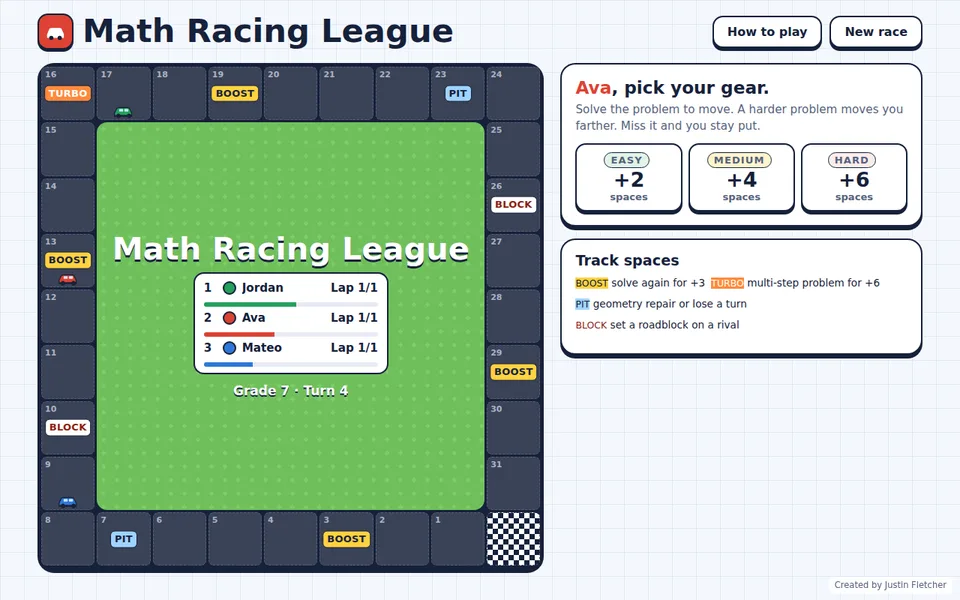
- Math Racing League: Easy moves 2 spaces, Medium 4 and Hard 6.
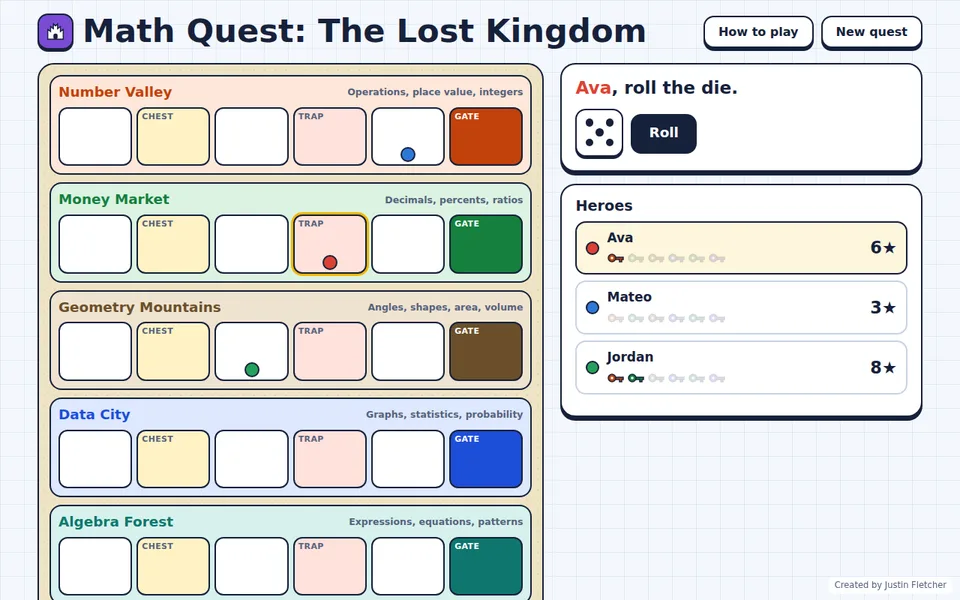
- Math Quest: The Lost Kingdom: A journey through six regions of math to reach the Lost Castle.
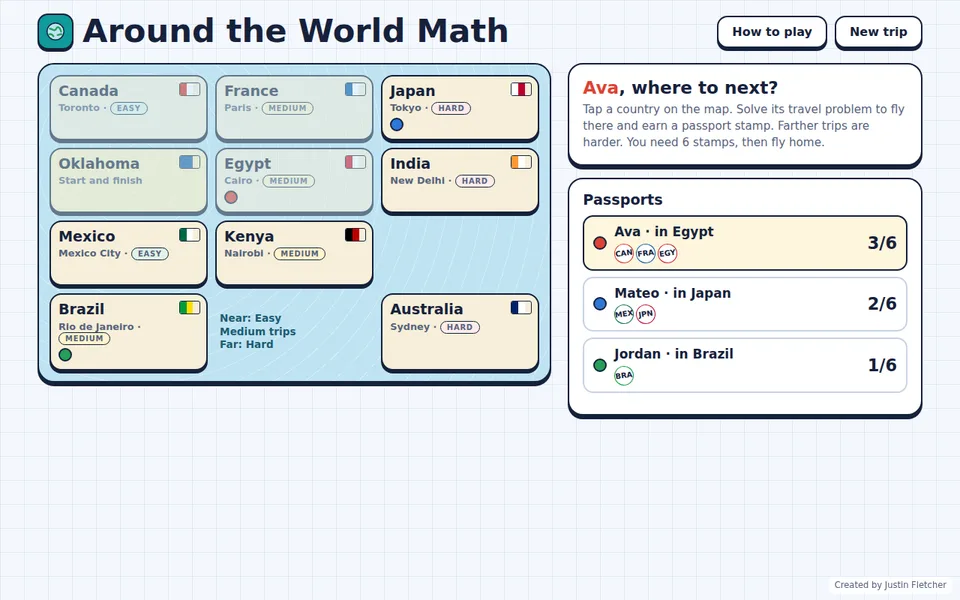
- Around the World Math: Travel problems with money, distance and time.
- Krypto: Make a true equation from five cards. A younger player can find a simple one while an older one hunts for a longer one.
Play as a team
Another option is to put siblings on the same team. The older child explains, the younger one learns, and nobody loses to their little brother or sister. Explaining is also one of the best ways for the older child to understand the math more deeply.
Tips for sibling game time
- Set the grade for the younger child, and have the older one pick Hard problems.
- Agree on house rules before you start, like no answering for someone else.
- Keep rounds short so the younger child doesn't run out of steam.
Common questions
How many kids can play at once?
Up to 6 players or teams on one screen.
Which grades do the multi-grade games cover?
Most cover grades 3–8. Younger kids can play the K–2 games, like Counting Critters and Fact Fiesta.