Can My Kids Actually Learn Math Facts Through Games?
Why this matters
Math facts are the foundation for everything that comes later. Kids who have to count on their fingers for 7 × 8 struggle with fractions, division and algebra. The question isn't whether facts matter, but how to get enough practice in without tears.
Yes, kids can learn math facts through games, as long as the game gives them a lot of practice and makes them think about strategies, not just guess.
What fact fluency takes
- Lots of repetition. Fluency comes from seeing the same facts many times.
- Strategies. Doubles, making 10 and "double and double again" for × 4 help kids figure out facts they don't know yet.
- Fast feedback. A wrong answer should be caught right away, not practiced 20 times on a worksheet.
- Wanting to keep going. The biggest advantage of a game is that kids do more problems because they want to win.
Fact games that fit
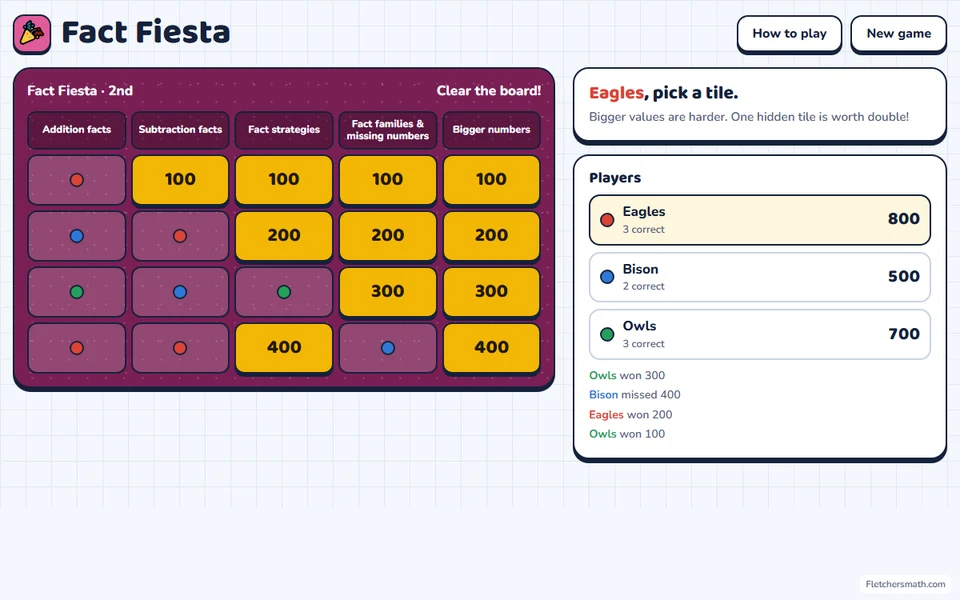
- Fact Fiesta (grades 1–3): Addition and subtraction facts, strategies, fact families and missing numbers.
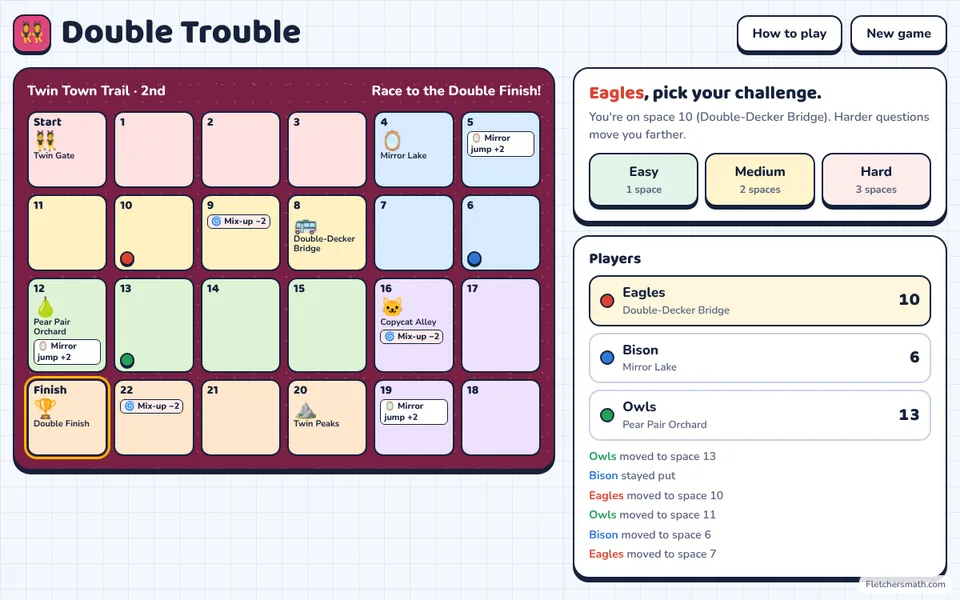
- Double Trouble (grades 1–4): Doubles, halves and near doubles for faster mental math.
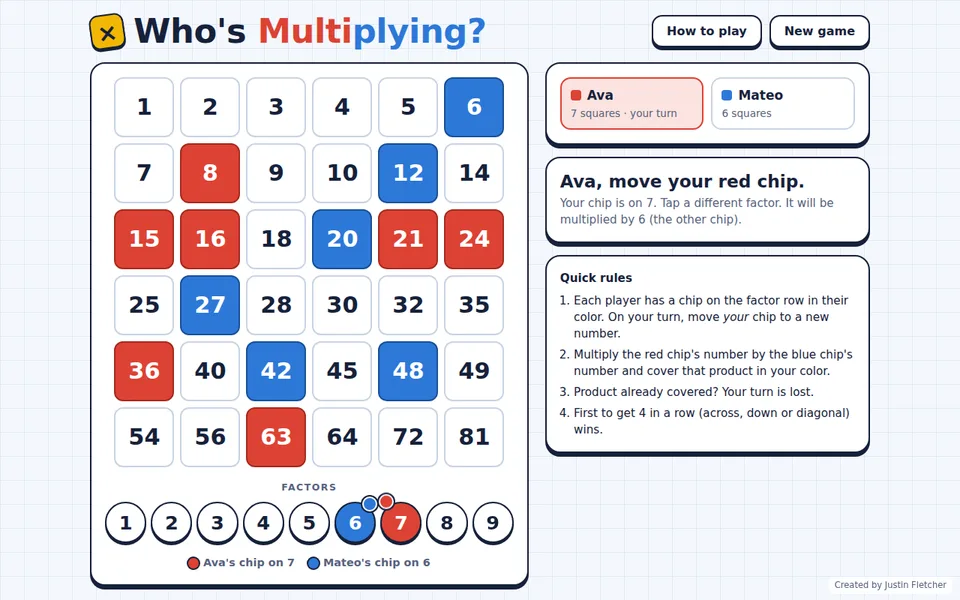
- Who's Multiplying? (grades 3–5): Multiply the two chips, claim the product and get four in a row. Strategy decides which facts you practice.
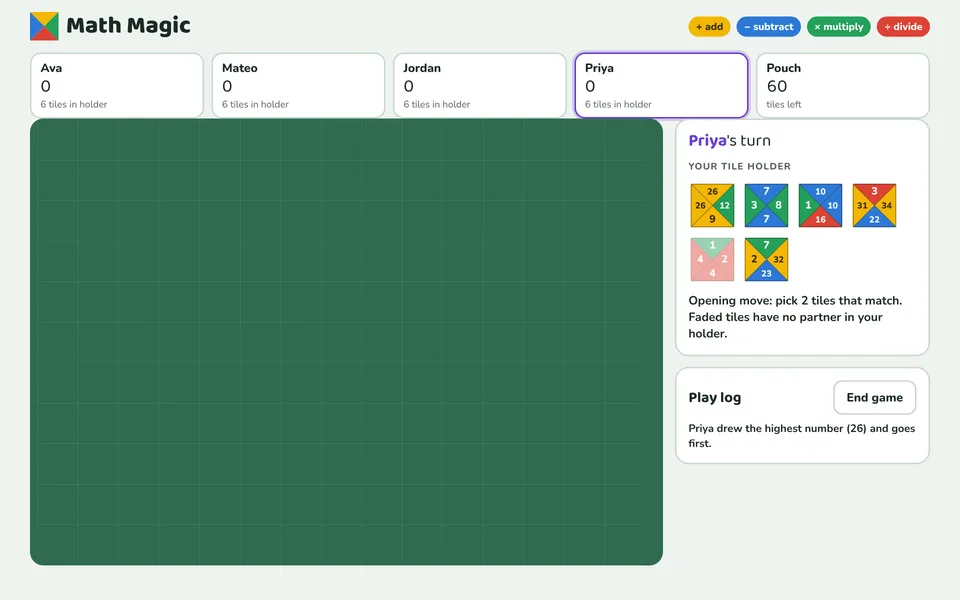
- Math Magic (grades 3–8): Score the math on every matching side of a tile.
- Counting Critters (grades K–2): Counting, making 10, adding and subtracting.
How to use them at home
- A few short rounds most days beats one long session a week.
- Play with your child and talk about strategies: "How did you know 6 × 7 so fast?"
- Notice which facts keep tripping them up and practice those off-screen too, in the car or at dinner.
A game won't do it all on its own, but it can turn the practice kids avoid into practice they ask for.
Common questions
How long does it take to learn math facts?
It varies a lot from child to child. Short, regular practice over weeks and months works better than cramming.
Which games are best for multiplication facts?
Start with Who's Multiplying? for grades 3–5, and Math Magic for mixed operations.