Math Games for Elementary Students: Keeping It Fun AND Educational
Elementary school is when kids decide whether math is something they're good at. Positive, playful practice in these years builds the fact fluency and number sense that everything later depends on.
Young kids love games, which makes elementary math the easiest place to use them well. The goal is to keep the fun and make sure the math underneath is solid.
What younger kids need from a math game
- Short turns. Attention spans are short. One problem per turn keeps things moving.
- Pictures. Counting critters, shading pizza slices and reading picture graphs make abstract ideas concrete.
- Strategies, not just speed. Doubles, making 10 and near doubles build mental math that lasts.
- A grown-up or teammates nearby. Talking about the math is how younger kids learn it.
Kindergarten to 2nd grade
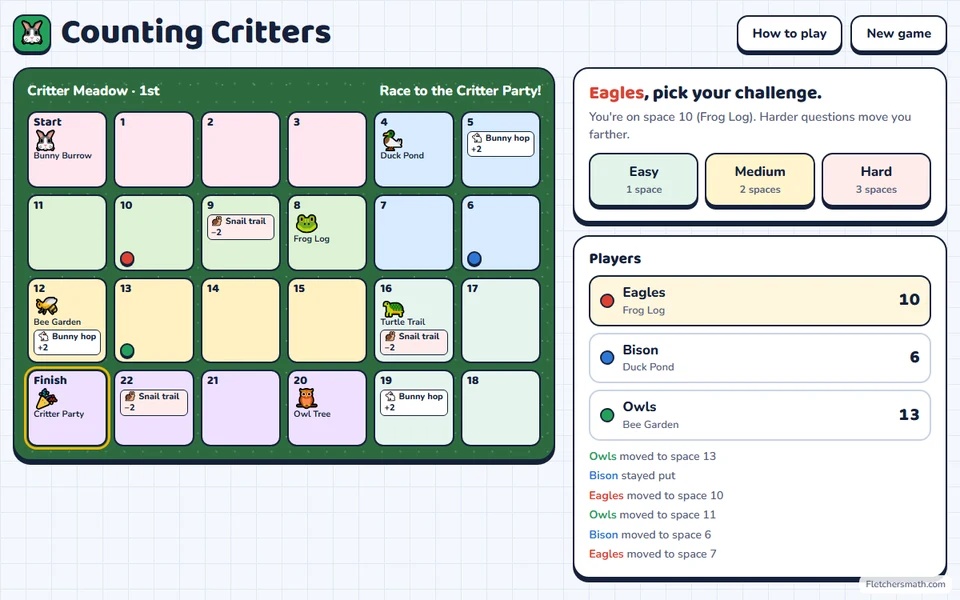
- Counting Critters: Counting, comparing, making 10, adding and subtracting.
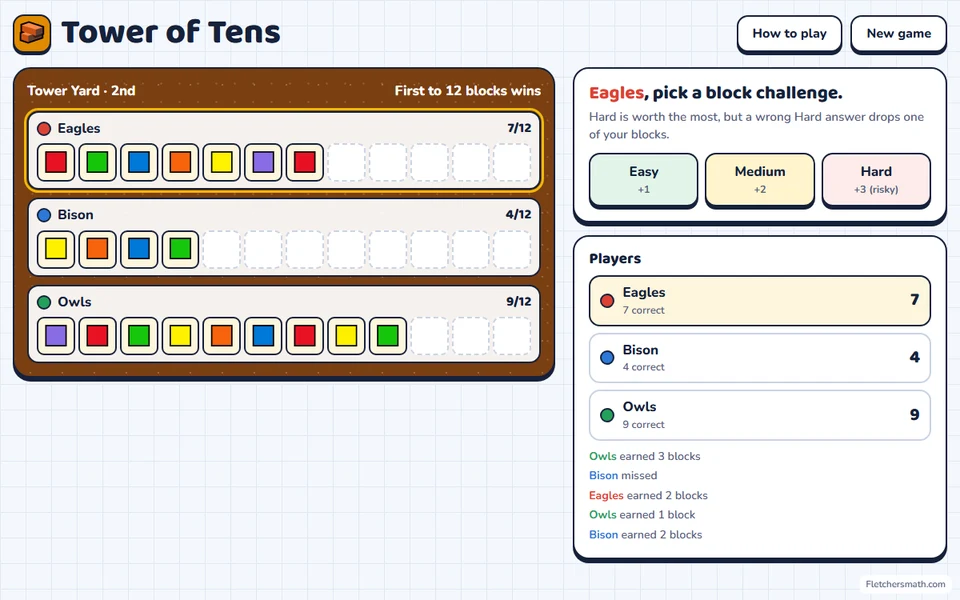
- Tower of Tens: Place value with tens and ones.
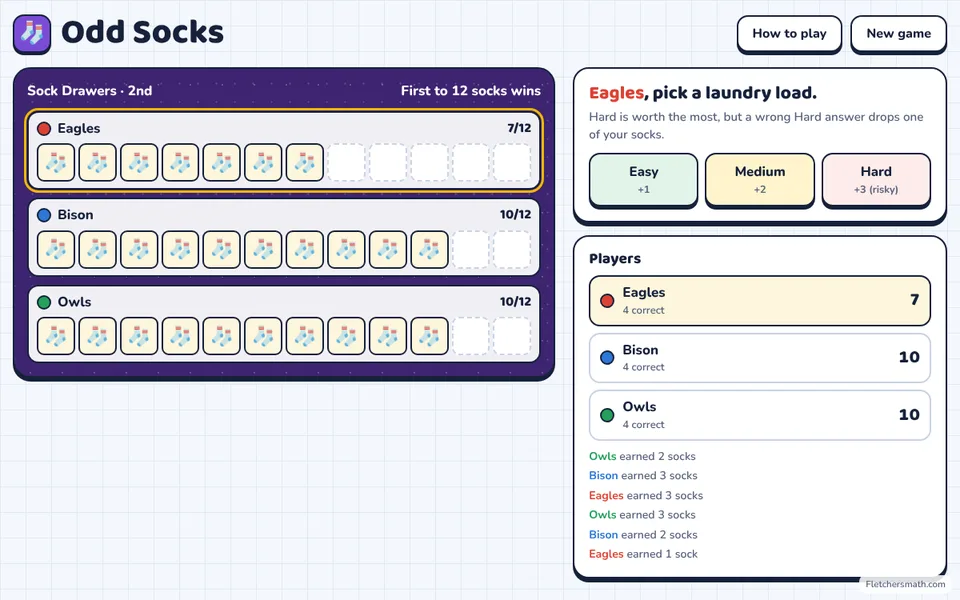
- Odd Socks: Even and odd, with socks that need a match.
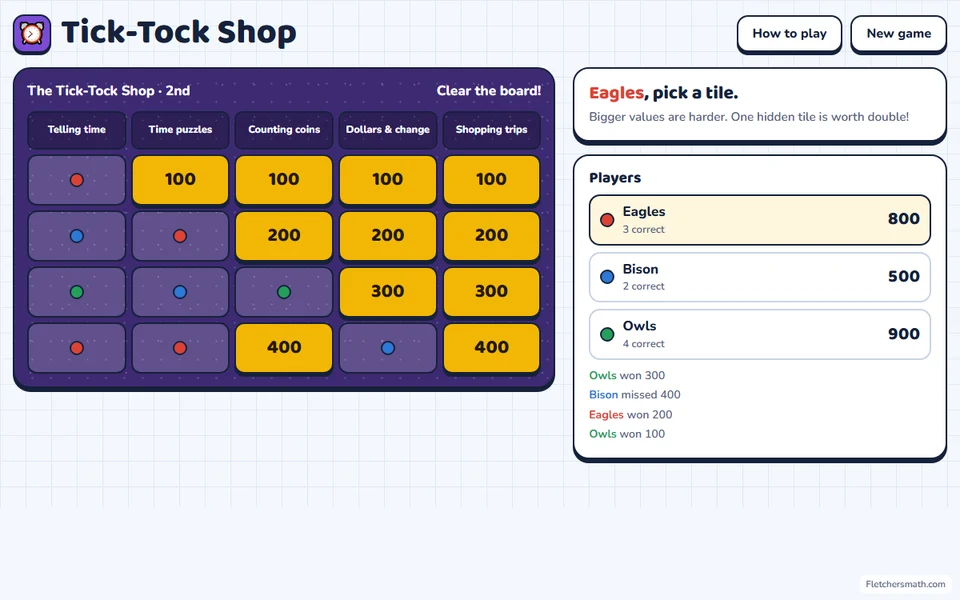
- Tick-Tock Shop: Clocks, calendars, coins and dollars.
- Shape Builders and Inchworm Race: Shapes and measuring length.
3rd to 5th grade
- Who's Multiplying?: Multiplication facts in a 4-in-a-row strategy game.
- Fraction Frenzy: Fractions with pizza slices, number lines and operations.
- Garden Planner: Area and perimeter while planning a garden.
- Time Travelers: Telling time and elapsed time.
- Place Value Bank Heist: Place value, where bigger locks mean bigger loot.
- Cube Quest: Volume for 5th grade.
At home
For parents, the best way to use a math game is to play it together. Take turns, talk about how you got your answer, and stop while it's still fun. The games run on a laptop, Chromebook or iPad browser with no accounts or ads.
See every game for kindergarten, 1st, 2nd, 3rd, 4th and 5th grade.
Common questions
Can young kids play without being able to read well?
The early math games use pictures and short questions, but a grown-up or older teammate reading along helps most K–1 players.
How many kids can play?
Up to 6 players or teams on one screen, which works for siblings at home or small groups at school.