How to Gamify Your Math Class in 5 Simple Steps
Gamifying doesn't mean turning class into an arcade. It means giving students a reason to do the next problem. Done well, it gets more practice out of the same 15 minutes, and the kids who usually shut down are the ones leaning in.
You don't need a points system for the whole year, badges or a new app to gamify your math class. You need a few routines that make practice feel like play. Here's a simple way to start.
Step 1: Pick one routine, not a whole system
Start with one game in one slot of your week, like "Friday review" or "the last 15 minutes after a quiz." A predictable slot is easier to manage than games popping up at random, and students will start looking forward to it.
Step 2: Match the game to today's skill
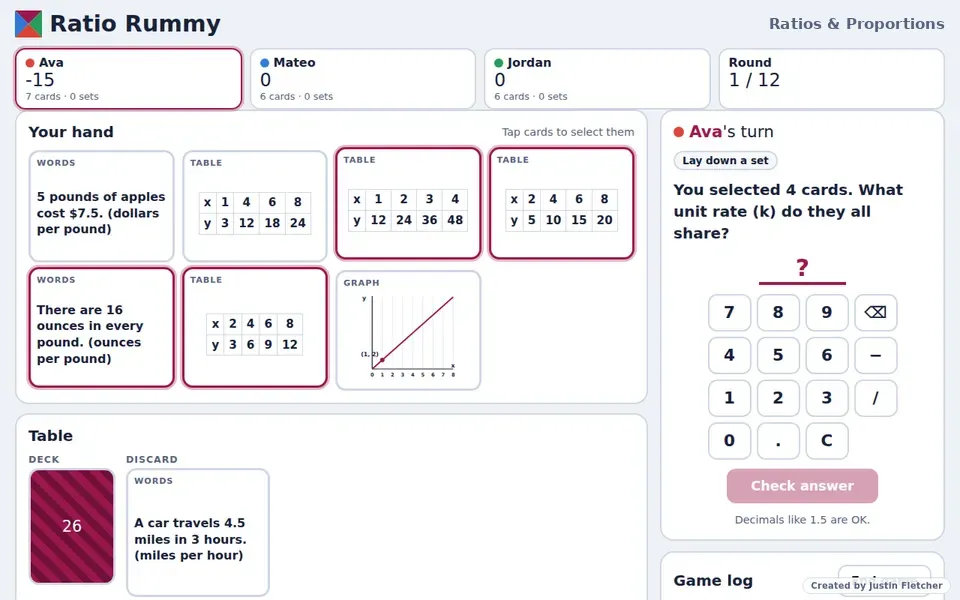
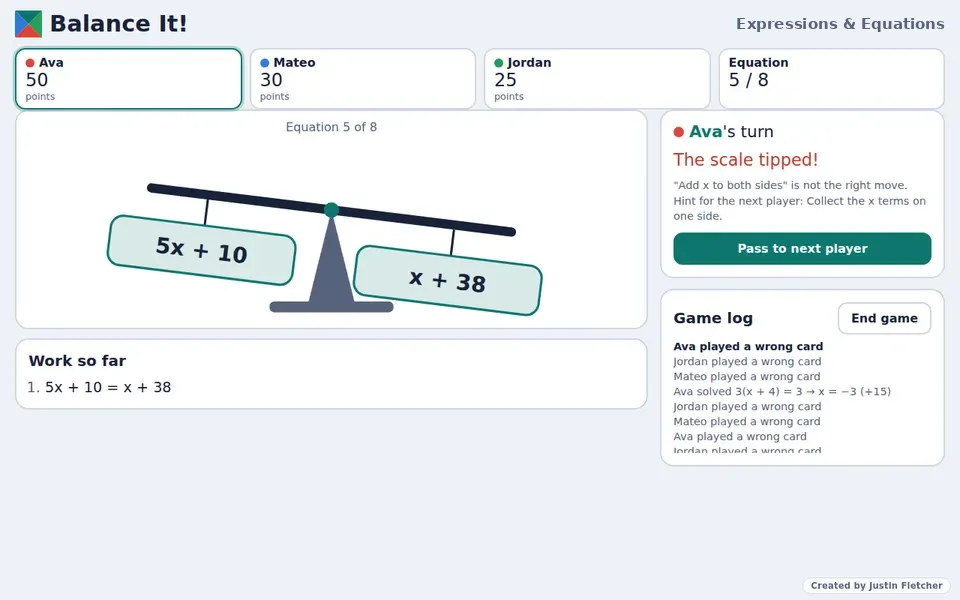
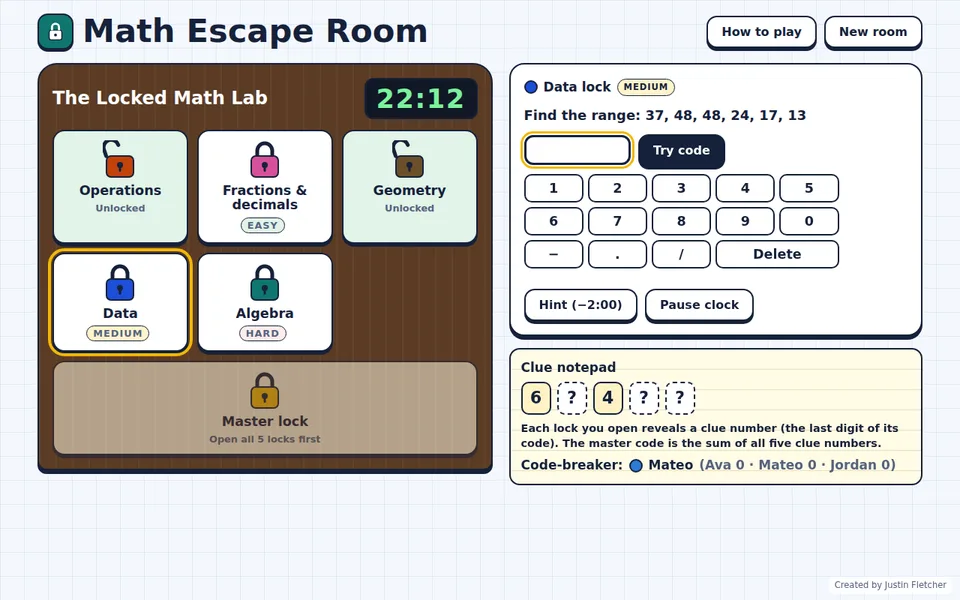
The game should practice what you're teaching right now, not something unrelated. If you're on proportions, play Ratio Rummy. If you're on equations, play Balance It!. If you're reviewing a whole unit, use a mixed game like Math Escape Room and set it to your grade. The curriculum guide lists the games that fit each unit.
Step 3: Make teams
Teams of 3 to 5 work better than individuals for whole-class play. Everyone has a job, the quiet kids have cover, and the team talk is where the real learning happens. Fletcher Math games handle up to 6 players or teams on one screen and track turns and scores for you.
Step 4: Build in accountability
A game shouldn't let one strong student carry the team. A few ways to keep everyone working:
- Every student solves on a whiteboard or scrap paper before the team answers.
- Rotate who taps the answer each round.
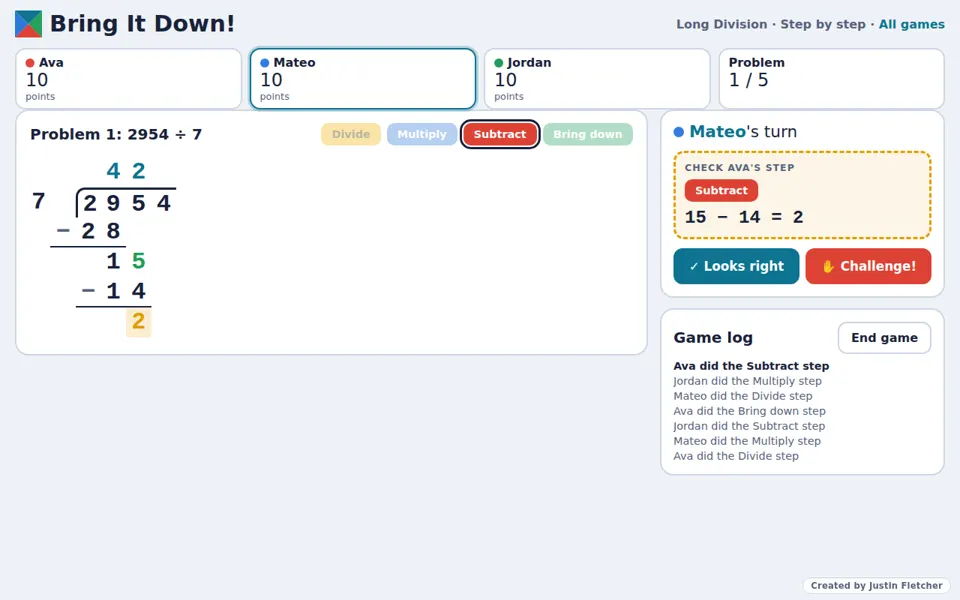
- Use games with a built-in check, like Bring It Down! and Split or Stack, where teams check each other's steps and call Challenge! on mistakes.
Step 5: Debrief for two minutes
End with a quick question: "Which problem tripped your team up?" or "What would you tell someone who got that one wrong?" Fletcher Math games show the worked steps after a miss, which gives you a ready-made example to talk through. Two minutes of talk turns a fun round into a lesson students remember.
What to avoid
- Games that need a lot of setup. If you spend ten minutes on logins, you've lost the period.
- Speed-only games for the whole class. They reward the fastest kids and embarrass the rest. Choose games where strategy and teamwork matter too.
- Games as a reward only. If games are only for "when we finish," the kids who need the practice most never get to play.
Want to try a game in your class tomorrow? Every game has a free demo, and you can pick any 3 games free when you join the newsletter.
Common questions
How often should I use games in math class?
Start with once a week in a set slot, then add more where they help. Many teachers use them for warm-ups, review days and the end of a period.
Do I need devices for every student?
No. One screen is enough. The class plays in teams on the smartboard or projector.